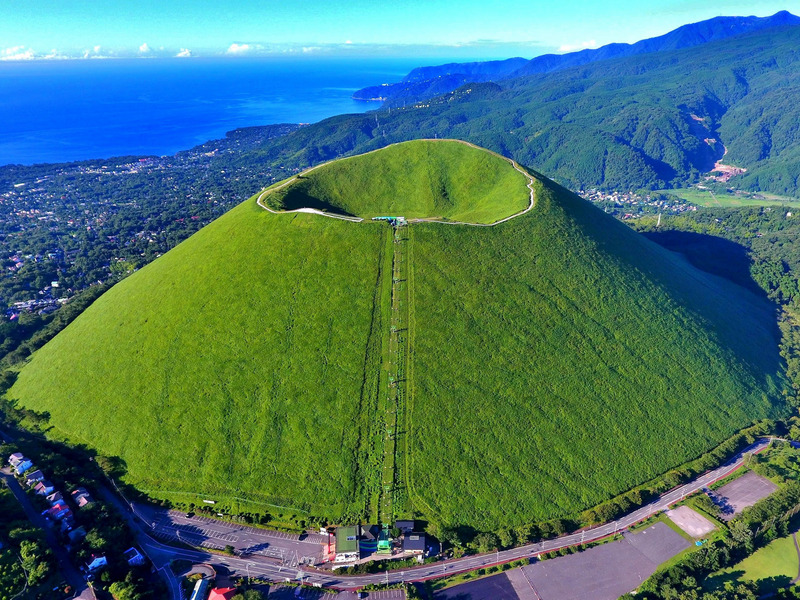
Google Earth: Ito city and Mt. Ōmuro (bottom center)
Mt. Ōmuro: More Than a View
Mount Ōmuro is one of the Izu Peninsula’s most iconic places. Its distinctive volcanic shape is said to resemble a green rice bowl turned upside down.
In the past few years, an increasing number of videos and travel articles have made Mount Ōmuro the most popular tourist destination in the Izu Peninsula. Most of these travel profiles focus on the mountain as a scenic sightseeing destination and provide useful information for short-term visitors who want to know what they should do there.
For the people of Ito, Mount Ōmuro has long existed as much more than a tourist attraction. The mountain has deep connections to nearby Ike Village, local traditions, Japanese mythology, and the changing history of the Izu Peninsula itself.
South slope of Mt. Omuro in winter
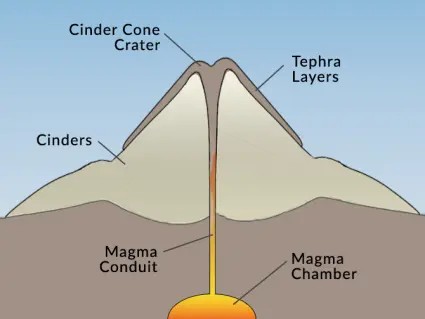
Cinder Cone Features - EarthHow
Forged in Fire
Mt. Ōmuro is a cinder or scoria-cone volcano formed by an eruption around 4,000 years ago. Its even, bowl-shaped form, about 300 meters across at the crater, rising to 580 meters above sea level, still captures attention.
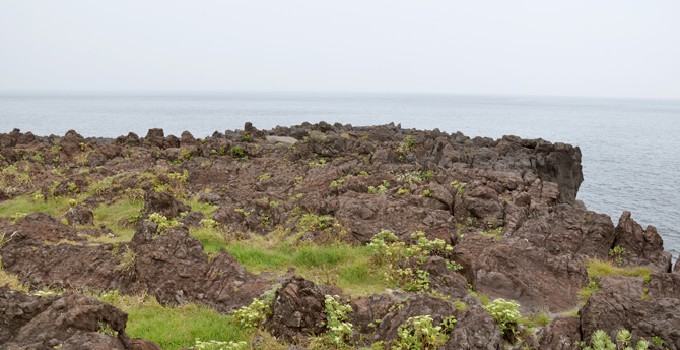
That eruption reshaped the region. Lava flowed 4 kilometers into the valleys and toward the sea, forming the gently sloping Izu-Kōgen plateau and covering roughly nine kilometers of shoreline to create the rugged Jogasaki Coast. In places around Itō you can still see layers of pitch-black volcanic ash, a silent marker of the mountain’s explosive past.
Scoria - Photo by Jonathan Zander
Everywhere you go around Ito, you see scoria that came from Mt. Ōmuro.
Lava flow from Mt Ōmuro (in brown)
Lava flowed about 4 kilometers to the ocean
Photo by Magda Ehlers (Pexels)
Fire as Renewal
Every late winter, for more than 700 years now, the slopes are set alight in Yamayaki, literally “mountain burning.” Originally this cleared dead grass for thatched roofing and pest control. Today it’s still done partly for those reasons, but it’s also a striking festival that heralds spring. The fire ripples up the slopes in about 30 to 40 minutes, turning the mountain black before green returns in spring.
Mt. Omuro Mountain Burning Event
The Shrine at the Summit
At the center of the crater stands a small Sengen Shrine. Unlike most Sengen shrines, dedicated to Mt. Fuji’s goddess Konohanasakuya-hime, this one honors her older sister, Iwanagahime, the goddess of endurance and long life. For centuries, women have made a pilgrimage here to pray for safe childbirth and family well-being.
If you’d like to dive deeper into her story, I’ve covered it in detail in my post: Mt. Ōmuro’s Sengen Shrine.
Guardians of the Sea: Eight Jizō (八ヶ岳地蔵)
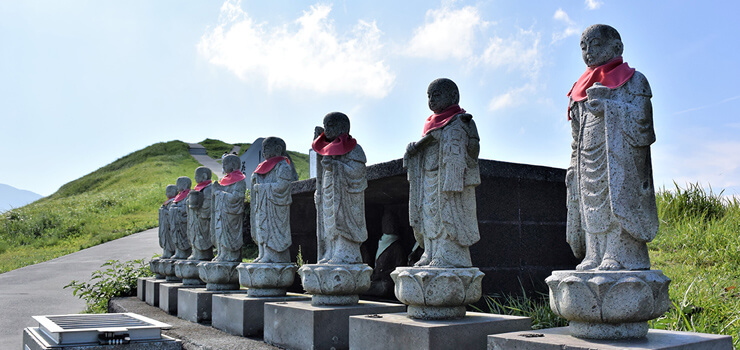
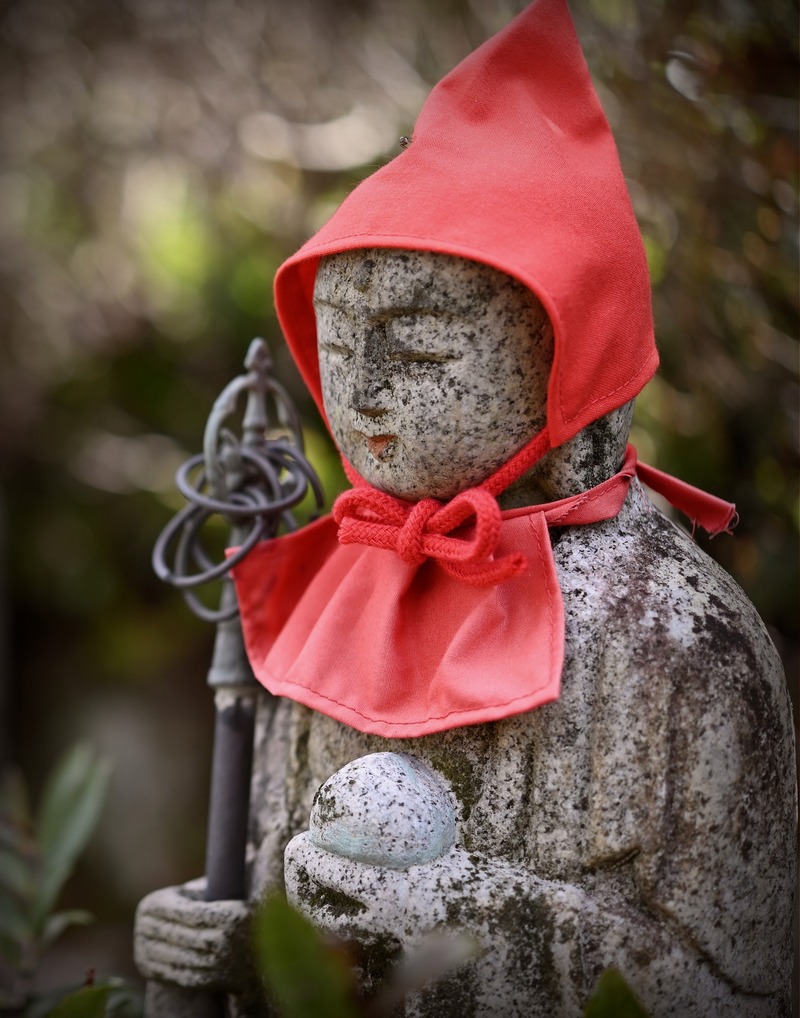
As you begin a clockwise walk around the crater rim, one of the first things you come across is a row of eight Jizō statues facing the ocean. Jizō are protectors, especially of children and travelers.
One interesting aspect of the Jizo is that they are said to have been placed by fishermen praying for safety at sea, even though Ike itself has historically been a mountain farming community rather than a fishing village.
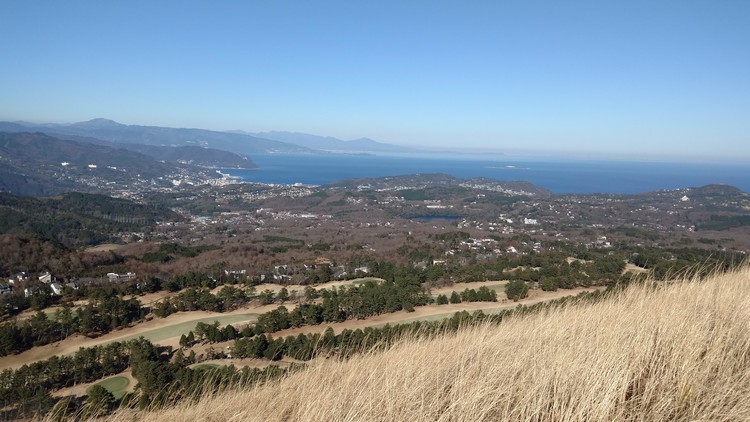
However, Mount Omuro faces toward the coastal village of Futo, and the mountain itself is geographically divided between the two communities. The lower slopes and chairlift area belong to Futo, while most of the mountain above belongs to Ike.
Older local residents sometimes describe a long history of cooperation between the two villages, including exchanges of rice and fish during festivals and other community events. While the exact origins of the eight Jizo are not fully clear, the statues may reflect those older connections between the mountain, the sea, and the neighboring communities surrounding Mount Omuro.
https://omuroyama.com/event/powerspot/
Guardians of the Land: Five Nyorai
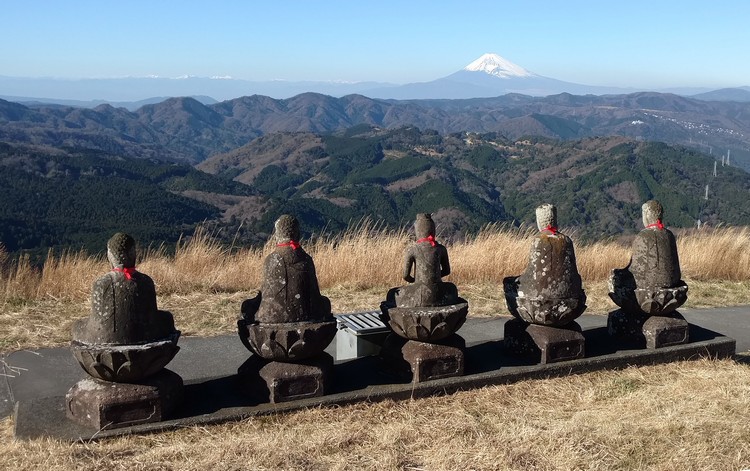
Continue further around the rim, and you’ll see another line of statues on the western side of the rim: five stone Nyorai. In Buddhist tradition, Nyorai are Buddhas who have reached full enlightenment. They are different from Bodhisattvas, who remain active in the world to guide others along the path.
The five Nyorai at Mt. Ōmuro were placed here more than 300 years ago. Lined up in a row, they face inland toward the mountains, a counterpoint to the Jizō looking out to sea. Together, the two groups link the mountain with both sides of local life: land and ocean, farming and fishing.
Reaching the Top
Because Mt. Ōmuro is a protected national monument and its slopes are steep and fragile, there is no hiking path. A six-minute chairlift takes visitors to the summit. From there, it’s easy to circle the crater rim. Most people walk once around, take their photos, and descend. But if you pause at the shrine, stop in front of the statues, or better yet, join a local guide who can interpret the mountain’s stories and role in local culture, the visit becomes much more than a quick sightseeing stop.
A Place With Layers
Mt. Ōmuro isn’t just a landmark. It’s a place where geology, ritual, and everyday life meet: volcanic fire formed the land, ritual fire renews it each year, gods and Buddhas linger in the crater, and both farmers and fishermen turn to for protection. The views may draw people in—but it’s the layers of story, quiet and alive, that make the mountain worth discovering.
A Personal Note
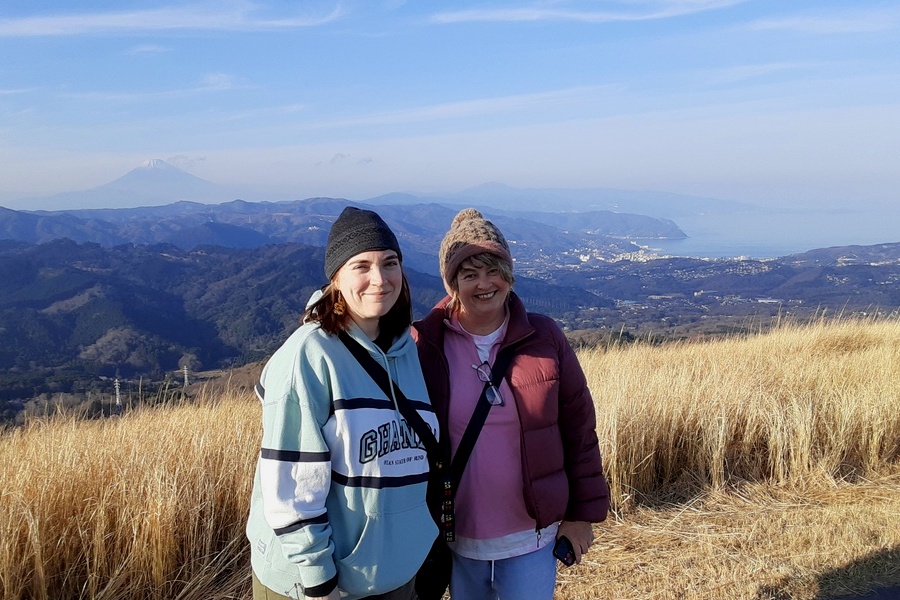
When I guide people here, I encourage them to walk slowly, to notice more than the horizon. The shrine, the Jizō, the Nyorai, even the black volcanic soil underfoot—these details are what connect the mountain to the lives of people who have lived in its shadow for centuries. Many of those people are my neighbors who work at Mt. Ōmuro. For me, sharing these connections is what makes Mt. Ōmuro such a special place.
Mt. Ōmuro can be included in your full-day private tour. For guests staying in Izu-Kōgen with less time, we also offer half-day shared tours.