Wasabi: Japan’s Most Misunderstood Plant
And Why I Fell in Love With It in the Rivers of Izu
I didn’t expect a plant to have such an effect on me.
But the first time I walked beside a wasabi field in the mountains of Izu, following a narrow stone path along crystal-clear water, I stopped mid-step and just listened.
The sound wasn’t like a river or a waterfall. It was like an orchestra. Thousands of tiny currents slipping over stones at once, like monks chanting in a temple. The air smelled damp, earthy, clean, accompanied by wafts of cedar and cypress. Sunlight filtered through the forest canopy and flashed across the surface of the water like moving prayer beads.
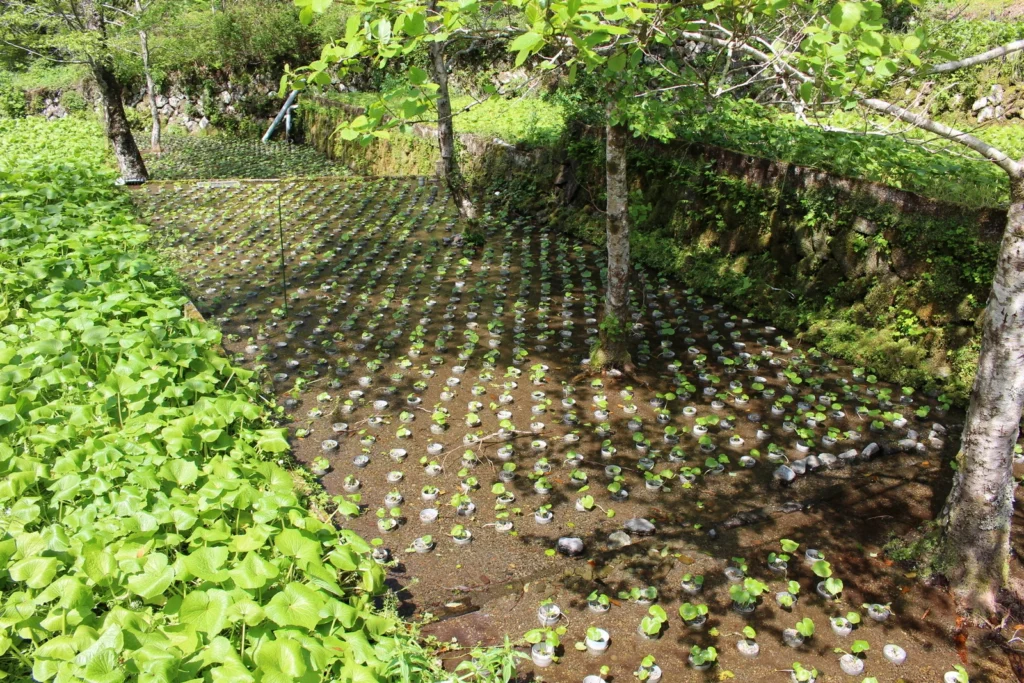
And there, rooted in the flow, were the wasabi plants. Row after row of them, each one resting in its chosen place amid the spring water as if seated in meditation.
People imagine farming to be dusty work: tractors, soil, sweat, sunburns. But wasabi farming? It’s closer to caretaking in a sanctuary. The farmers don’t shovel dirt, they guide rivers. They don’t battle nature, they collaborate with it.
That was the day I realized:
Wasabi isn’t just a condiment. It’s a way of life, one that refuses impurity.
Only after I stepped away and reflected did I begin to see see things differently.
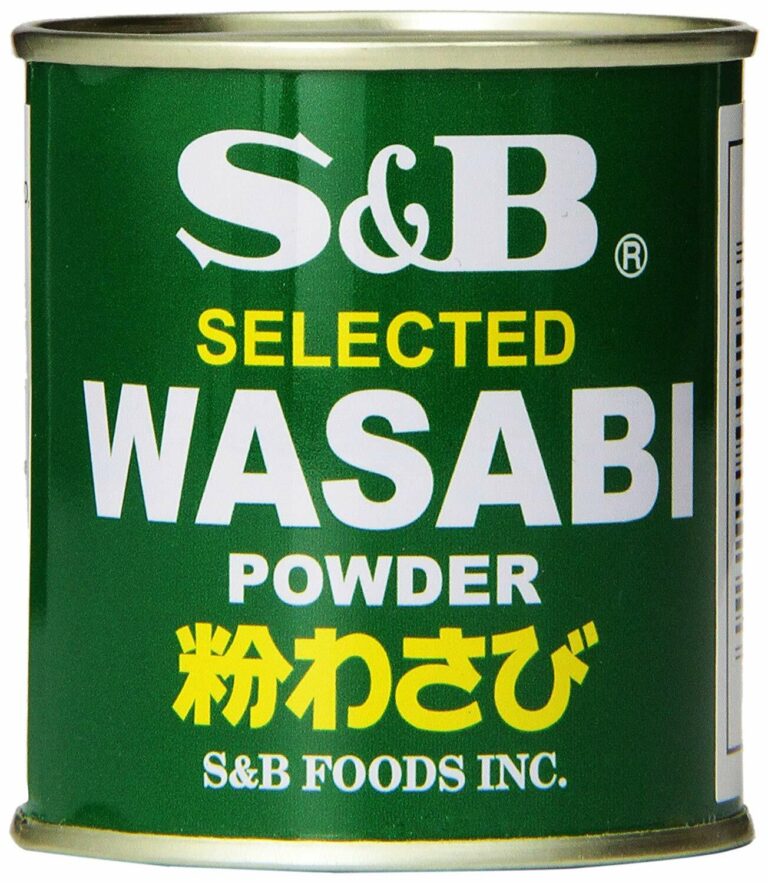
Most people have never tasted real wasabi. Including people who think they have. Including people who swear they love wasabi.
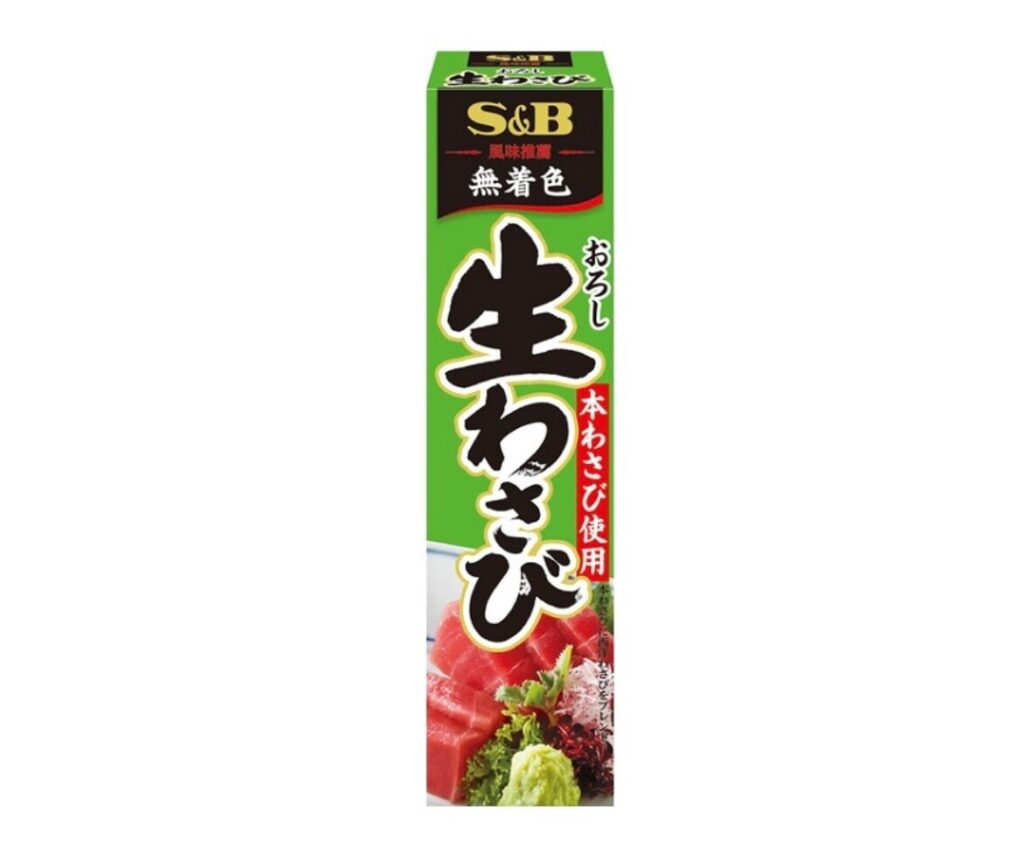
If your experience with “wasabi” has come in the form of a neon-green paste next to supermarket sushi, or squeezed from a plastic tube, you’ve probably been eating dyed horseradish mixed with mustard and starch.
Strong? Yes.
Real? Not even close.
The Biggest Culinary Impostor in the World
Let’s get this out of the way: I’m not judging anyone for not knowing the truth about wasabi. I didn’t know myself, even after living in Japan for years.
The food industry quietly swapped real wasabi for imitation sometime in the last century. Why?
Real wasabi is expensive. (One rhizome can cost from ¥1,500–¥3,000 or more.)
It’s labor-intensive to grow.
It loses its flavor within minutes of grating. You can’t pre-package freshness.
So 95% of “wasabi” worldwide (yes, even in most restaurants) is actually Western horseradish + mustard powder + food coloring.
And to be fair, it does the job: it gives a good blast up the nose and clears the sinuses. But it lacks everything that makes real wasabi beautiful.
So What Does Real Wasabi Taste Like?
Imagine biting into something that’s sharp but gentle.
It’s sweet at first, like fruit.
Then it blooms into a clean, floral heat—not a burn that lingers, but a bright burst that vanishes almost as soon as it arrives.
No bitterness. No artificial fire.
Just clarity.
And here’s the magic:
Freshly grated wasabi reaches its flavor peak at around 2–3 minutes. After 10 minutes, it’s already fading.
That means the best way to taste it is at the source, grated on the spot, straight from the rhizome.
Which brings me back to the rivers of Izu.
The Crop That Refuses to Compromise
Wasabi doesn’t grow in dirt.
Let me repeat that:
Wasabi grows in water. Flowing water.
Not sitting water, not ponds, not rice paddies. Think hand-built riverbeds, carefully layered with stones, gravel, and sand so mountain spring water can flow through at precisely the right speed.
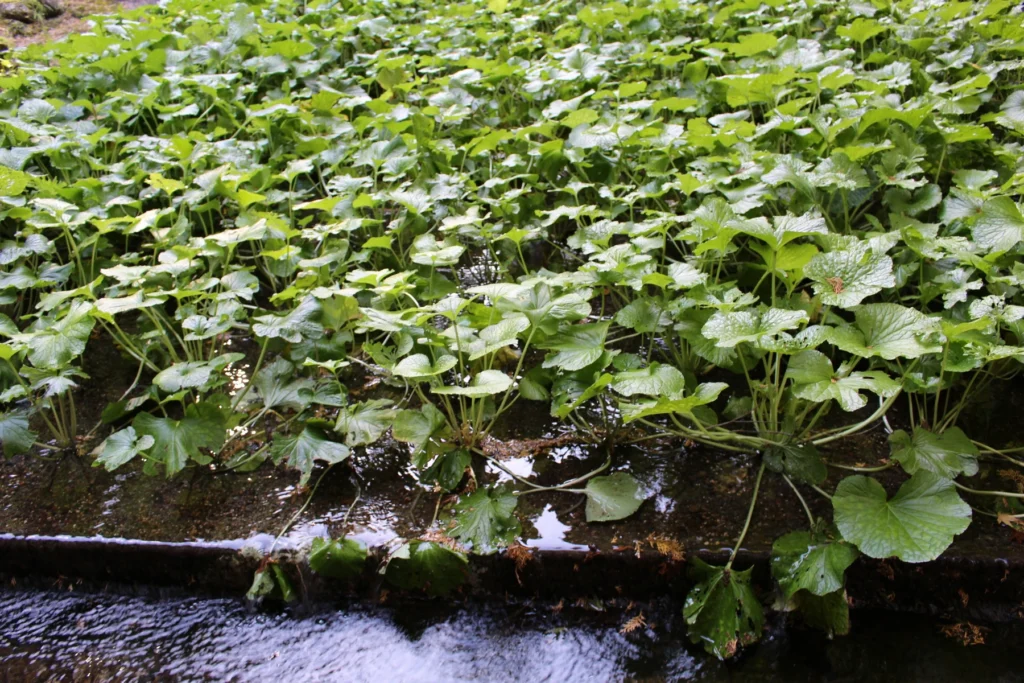

This unique growing method is called “sawa-wasabi” (water-grown wasabi). It’s the highest grade of wasabi, and it only grows in a handful of places in the world.
And Izu, my home, is the best.
Why?
Volcanic geology acts like a natural water purifier.
High rainfall + forest cover filter water into cold underground streams.
Natural shade from trees keeps temperatures stable year-round.
Steep river valleys create perfect gradients for terraced farms
The result?
Fields that look like ancient stone gardens crossed with rice terraces, and sound like miniature waterfalls flowing endlessly through millions of green leaves.
Walking Through a Wasabi Field Is Like Entering Another World
On my Wasabi & Waterfalls Tour, I lead guests along quiet river paths through these terraced farms. No machinery. No billboards. Just water, stone, and green.
People often go silent. not because I’ve said something profound, but because the place itself demands quiet.
One guest once whispered:
“It feels so pure.”
Even in Japan, a country famous for order and cleanliness, wasabi fields stand out like sacred places. They’re not religious sites, but they command reverence. You instinctively walk slower, speak softer, breathe deeper.
And then we get to the part everyone loves most.
The Grating Ceremony
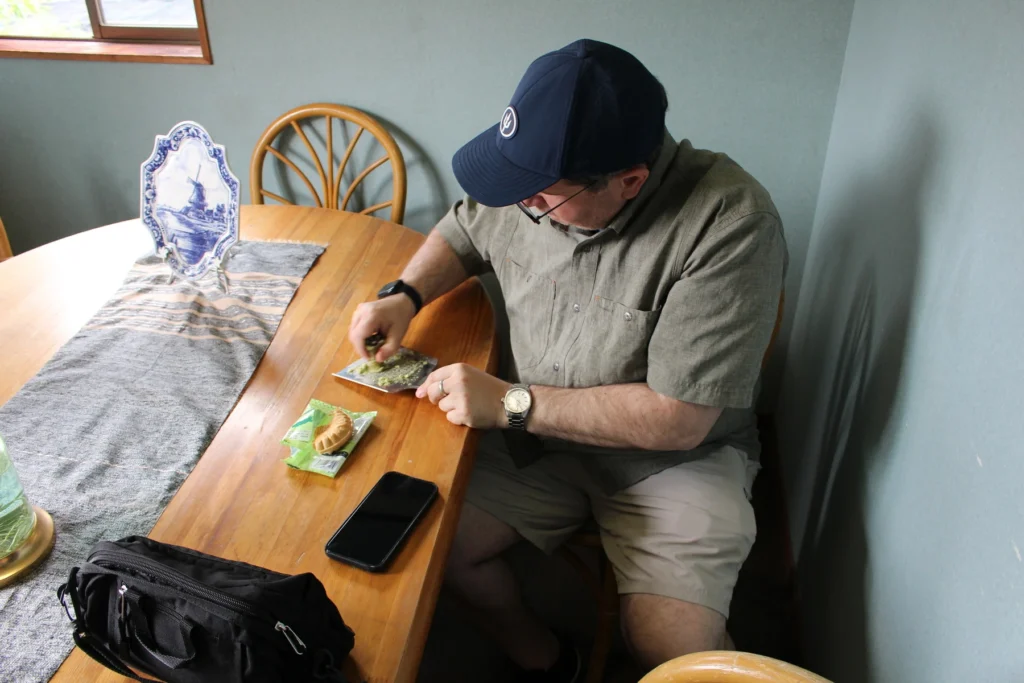
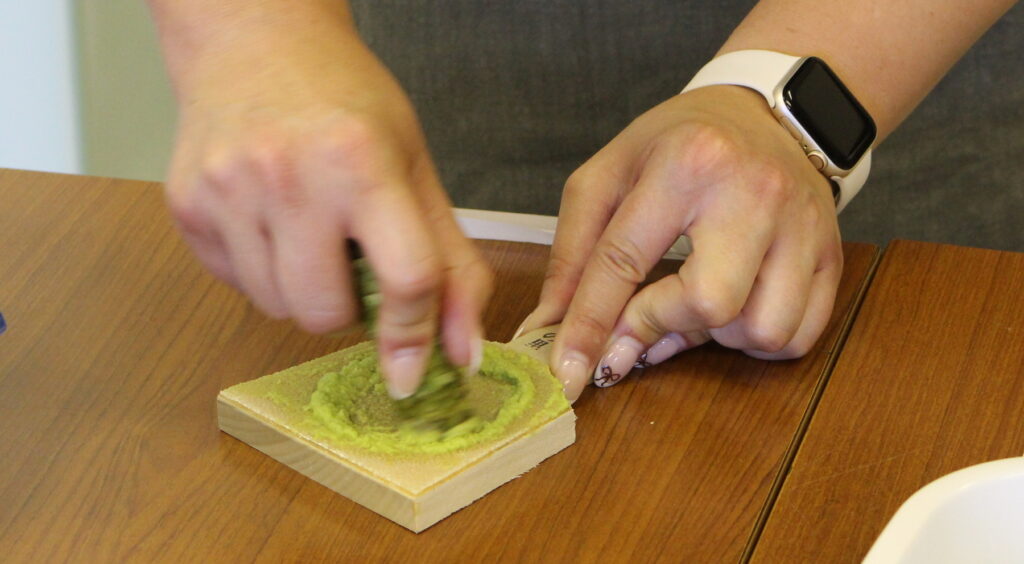
At the Izu Wasabi Visitor Center, you can enjoy a taste comparison. You’ll pick up a fresh rhizome and begin to grate it in slow circles on a grater called oroshigane. Soon, you’ll lean in the way you’d expect at a tea ceremony.
In that moment, I feel less like a tour guide and more like someone introducing two friends for the first time:
This is wasabi.
This is you.
Let’s see what happens.
Everyone reacts differently.
Some laugh. Some widen their eyes. Some close their eyes.
Wasabi History
Wasabi grows wild in Japan and has been used for more than a thousand years as both a food and medicinal plant. According to traditional accounts, organized cultivation began in the early Edo Period in Utogi, a mountain village in Shizuoka City. The jizawa cultivation method developed in Utogi later spread to other parts of Japan.
The beginnings of wasabi cultivation in Izu are less clear and subject to historical debate. For many years, the accepted story was that Itagaki Kanshiro of Yugashima brought cultivated wasabi seedlings from Utogi to the Amagi Mountains around 1744 and began growing them there. This story became widely known through a monument erected in 1924 near Jōren Falls honoring Kanshiro as the founder of “Amagi Wasabi.”
However, Izu historian Takayuki Hashimoto recently discovered records indicating that in 1744 three villages—Yugashima, Kadonohara, and Ichiyama—jointly experimented with planting wild wasabi already growing naturally in the Amagi Mountains. The documents describe villagers transplanting native wasabi into mountain valleys fed by spring water, locations well suited for cultivation.
Hashimoto points to evidence that suggests wild wasabi may have existed in Izu even earlier. A land survey document from Kumomi in western Izu dating to 1597 reportedly includes the place name “Wasabi Valley” (わさひさわ), which Hashimoto believes may be the oldest written reference to naturally occurring wasabi in Izu.
By the late Edo Period, wasabi cultivation had expanded rapidly throughout the Amagi region. Records from the early 1800s show large cooperative farming groups and hundreds of households involved in cultivation. Wasabi became an important source of income for mountain villages, and products were shipped from ports such as Ito to Edo, where growing demand for sushi and soba increased the popularity of wasabi across Japan.
How Izu Became Japan’s Wasabi Capital
The Shizuoka region, which includes the Izu Peninsula, produces around 80% of Japan’s wasabi. Some varieties have been cultivated here for over 400 years.
Wasabi farming began as a local innovation, but eventually became a matter of national pride. During the Edo Period, Shoguns in Edo Castle (modern Tokyo) prized Izu wasabi so highly that it was reserved as tribute.
What makes Izu’s wasabi so special?
According to the Shizuoka Wasabi Association, the secret lies in water quality and patience.
Most wasabi farms here are still run by family growers, some on land passed down for generations. They don’t flood their crops with hoses. They don’t dump fertilizer. They don’t harvest early to rush sales.
Instead:
They build stone channels by hand.
They monitor water flow daily.
They trim each plant leaf by leaf.
They wait 18–24 months for a rhizome to reach full maturity.
That’s right. Two years.
All for a plant that vanishes on your tongue in seconds.
There’s something poetic about that.
Beyond Food: Wasabi as a Symbol of Purity and Resilience
Even if you’ve never tasted fresh wasabi, there’s something profound about it.
It’s a crop that refuses shortcuts.
It only grows where water is crystal clean.
It requires balance between human effort and nature’s whim.
In that way, I’ve come to see wasabi as more than a condiment, it’s a metaphor for a certain kind of life. One rooted in patience, clarity, and calm strength.
Visitors often come expecting a food lesson and leave with something else entirely. I remember a guest who said:
“I thought I was coming to learn about Japanese food. But I think I learned something about Japanese values instead.”
Do You Have to Be a Foodie to Enjoy Wasabi Fields?
Not at all.
In fact, many of my guests don’t come for the wasabi.
They come for:
The sound of rushing river water
The moss-covered stones
The forest air
The waterfalls
The quiet
But almost everyone leaves surprised by how much they care about wasabi by the end.
One woman said:
“I’ll never be able to eat it from a tube again.”
If You Ever Visit — Here’s What to Look For
Even if you’re just passing through Izu, keep your eye out for:
✅ Rhizomes sold whole — Sometimes available in local farm stands or michi-no-eki roadside stations.
✅ Wasabi farms open to visitors — Rare, but some allow you to walk through or see processing areas.
✅ Dishes that use wasabi freshly grated on top — Not just sushi; try wasabi with soba, tempura, grilled meat, even ice cream.
I often tell guests:
“If you think you don’t like wasabi, you probably just haven’t met it yet.”
Closing Thoughts
I’ve guided hundreds of people through Izu’s forests, waterfalls, and wasabi fields. Some arrive skeptical, some confident, some just curious. But I’ve noticed the same expression appear on nearly every face at some point along the river:
A quiet smile. Eyes slightly wider. Shoulders relaxed.
Not because I taught them something, but because a humble green plant reminded them that purity still exists.
So whether you’re a sushi lover, a nature walker, or just someone craving a breath of clean air, remember this:
Wasabi is not just a condiment. It’s a place.
And if you’re ever in Izu, I’d be honored to introduce you to it in person.

Sushi has become very popular throughout the world. Perhaps the most recognizable ingredient in sushi is wasabi. By now, many sushi lovers know that the wasabi they have on their sushi is not actually wasabi. It is a horseradish based mixture of ingredients designed to mimic wasabi.
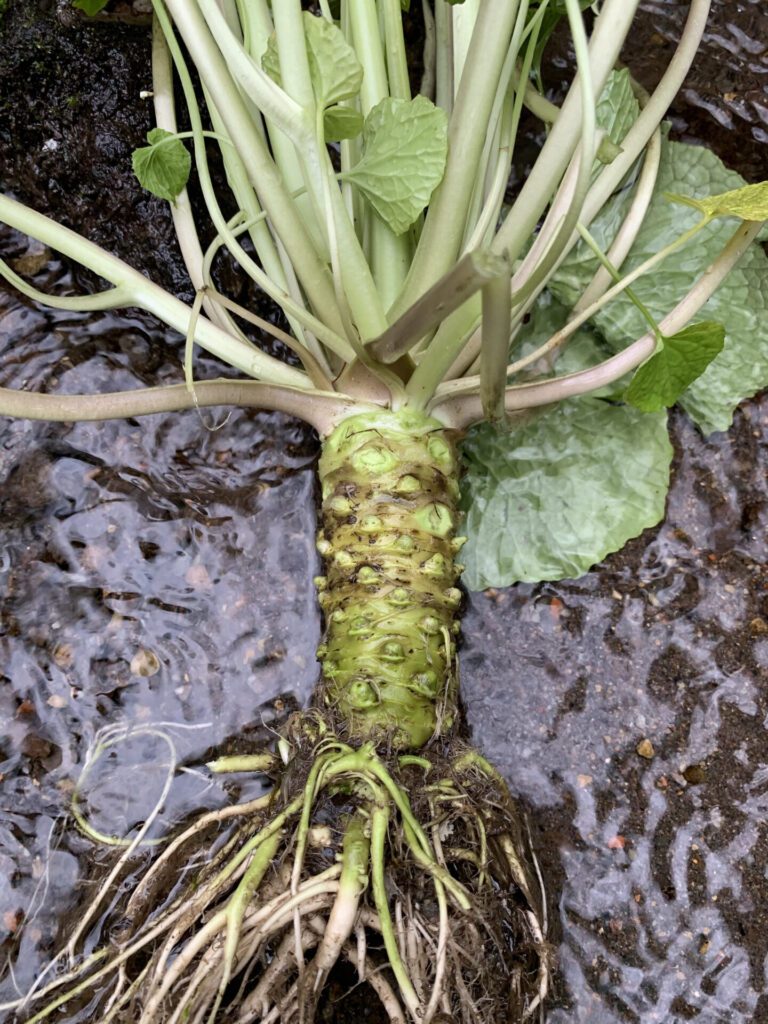
So what is real wasabi? It is the stem (not root) of an aquatic plant that grows in cold mountain streams. It is also very sensitive: grated wasabi must be eaten within 5-15 minutes in order to taste its fullest flavor and experience its most robust impact.
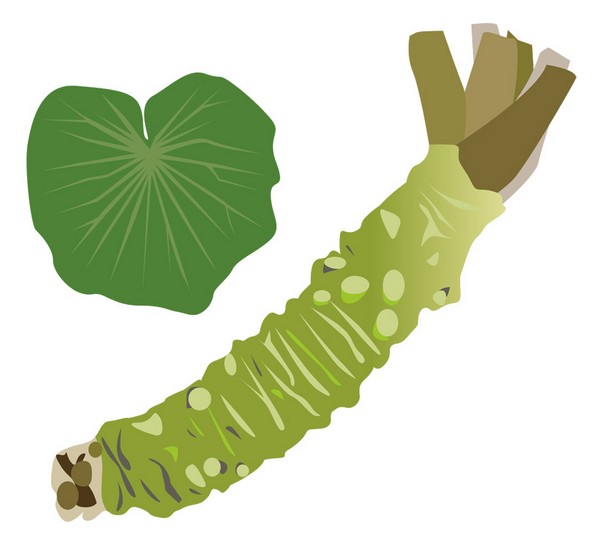
Let’s talk horticulture. Wasabi is a rhizome type of plant. It is easy to think of the part we eat as the root of the wasabi plant, but it’s actually the stem. A rhizome is the part of the stem that develops underground. They spread out horizontally, parallel to the soil, and sprout up new plants. Asparagus and bamboo are also types of rhizomes.
A similar type of plant is a tuber. And many tubers are also underground stems, like the wasabi plant. The stem tubers we all know and probably eat are the potato and carrot. There are also root tubers, like the sweet potato.
One of the main differences between a rhizome and a tuber is that tubers do not spread out horizontally.
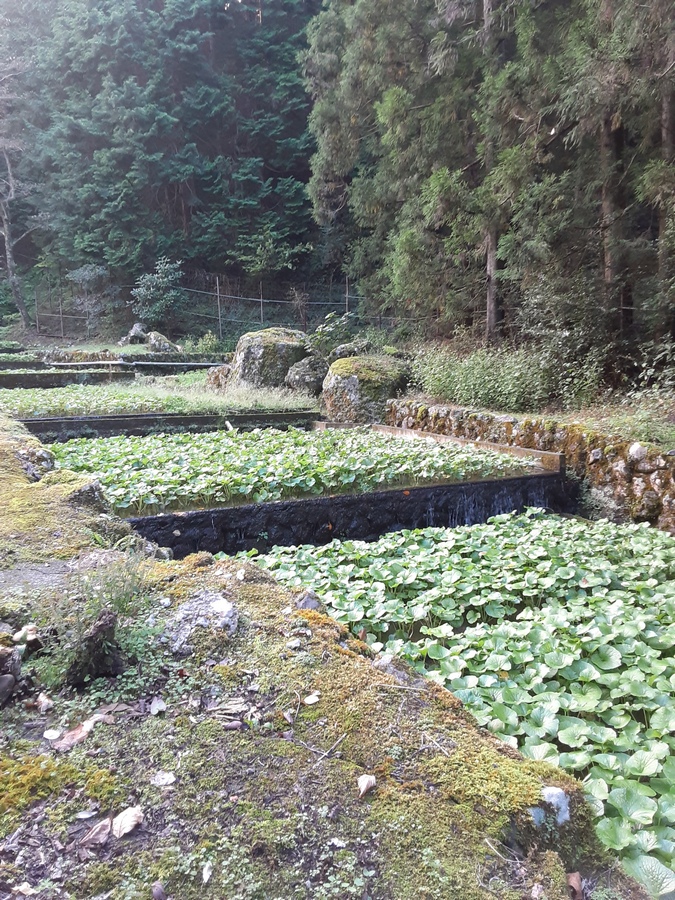
A typical wasabi field is called a wasabi-da in Japanese. Most wasabi fields in Izu are close to year-round rivers, which are fed by waters flowing down from the Amagi mountains.
The terraced design used by wasabi farmers in Izu is called tatami ishi shiki in Japanese and means terraced stone style. Water flows in at the top and flows through each field, keeping a constant flow of fresh water.
Without this constant, cool water and a cool air temperature, wasabi will not develop properly. That is why the cool mountain rivers of Izu are so well suited to wasabi production.
New wasabi plants can be propagated directly from the rhizome, like a potato, or from seeds. Flowers begin to bloom in the winter, and the seeds are fully developed by May.
Farmers start the seeds in pots and transplant them to the wasabi fields.

There are wasabi fields all over the Izu peninsula. Naka Izu in Izu City is the most famous area for wasabi production. It produces the greatest amount of high quality wasabi in Japan.
If you want to learn everything there is to know about wasabi and its cultivation, please visit the Shizuoka Department of Agriculture’s website Traditional WASABI Cultivation in Shizuoka.
The most famous wasabi production area in Izu is in Naka Izu near a town called Warabo where the Omi, Jizodo, and Sugehiki Rivers flow down from the Amagi mountains.
If you want to have the ultimate sushi experience, make a trip to Izu and find a sushi restaurant that serves fish freshly caught from Sagami Bay in the east or the Suruga Bay in the west and that uses fresh wasabi from Izu City. This would be a sushi lover’s version of heaven!
Here is a short film I made showing how water flows through a tatami ishi style wasabi field.
In January of 2022, I met Mr. Ryota Inoue and his family at one of their wasabi fields near my home in Ito. Mr. Inoue is the 8th generation wasabi farmer of his family. They started growing wasabi in the early Meiji period, when America first started diplomatic relations with Japan.
These photos show Mr. Inoue’s wasabi plants in various stages of development.
Click any image to open the gallery.